A bin built for plasterboard.
We drop an enclosed, weatherproof bin at your transfer station or site. Plasterboard goes in through the side, stays dry, and we take it away on our hook-lift trucks to be recycled into gypsum.
A Recycle initiative
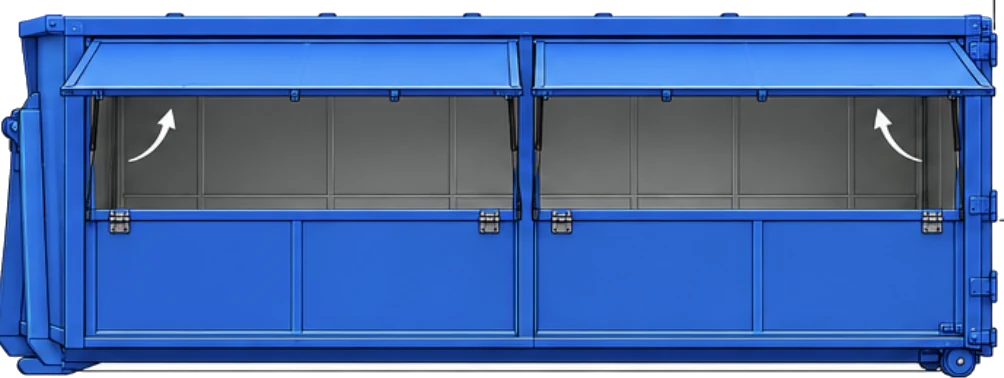
More than 100,000 tonnes. That’s how much plasterboard Australia’s builders send to landfill every year.source
Offcuts from new construction alone. Board pulled out in renovations and demolition comes on top of that.
Nearly two Harbour Bridges’ worth of steel, in weight, buried every year.workings
A year’s plasterboard would fill about 14,300 bins — parked nose to tail, a 90 km line that runs past Geelong and keeps going.workings
Stacked as sheets, a year’s landfilled plasterboard would bury the whole MCG field about seven metres deep — four people standing on each other’s shoulders.workings
How it works
The full run-through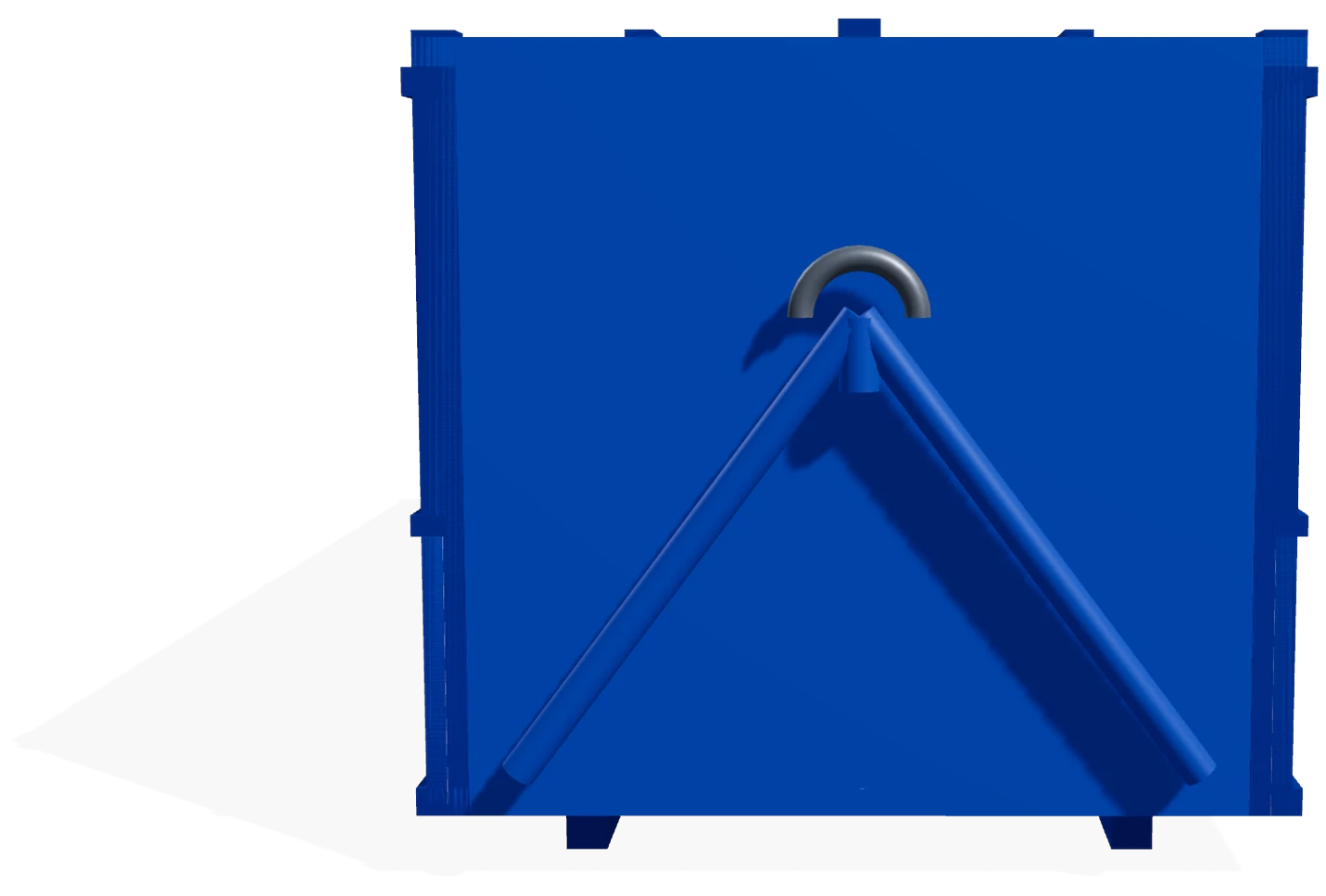
We drop the bin
Our hook-lift truck sets an enclosed 6.3 m bin down at your transfer station, depot or building site.
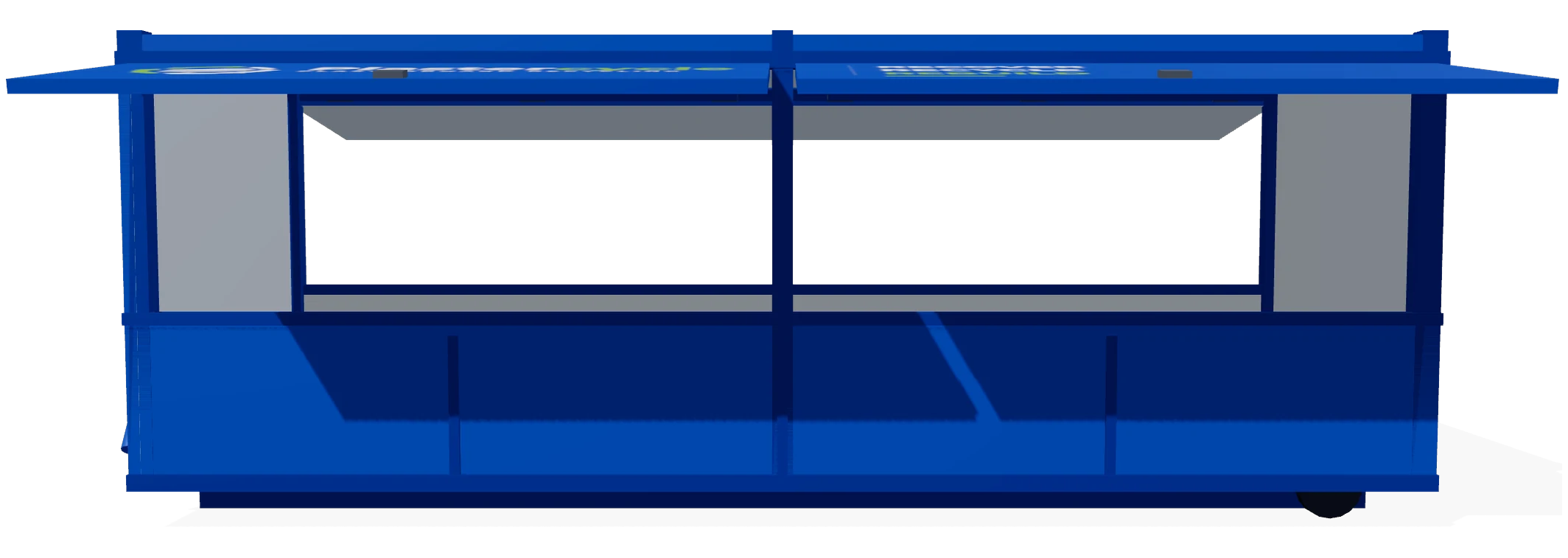
You fill it through the side
Lift a top-hinged panel and slide or throw the sheets in. The opening starts about a metre off the ground, so there’s no climbing in.
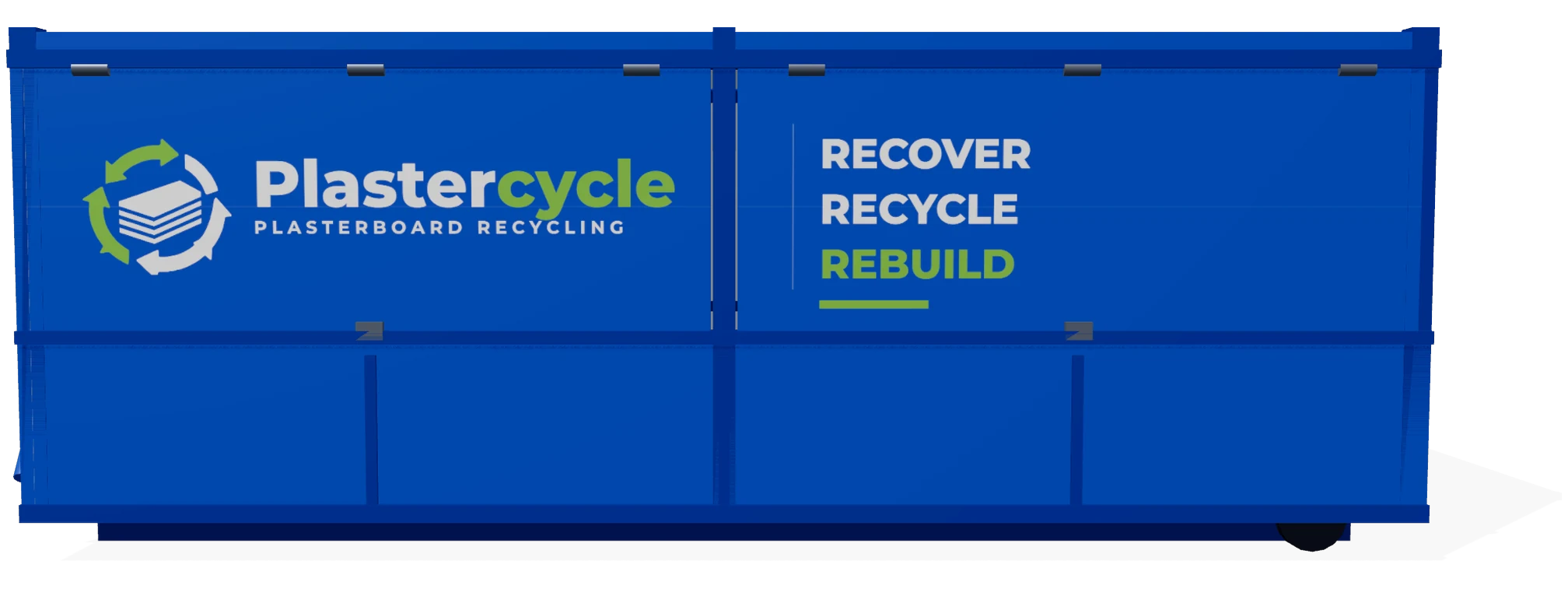
It stays dry
A closed roof, solid rear door and shut panels keep rain off the load — wet board is heavier to haul.
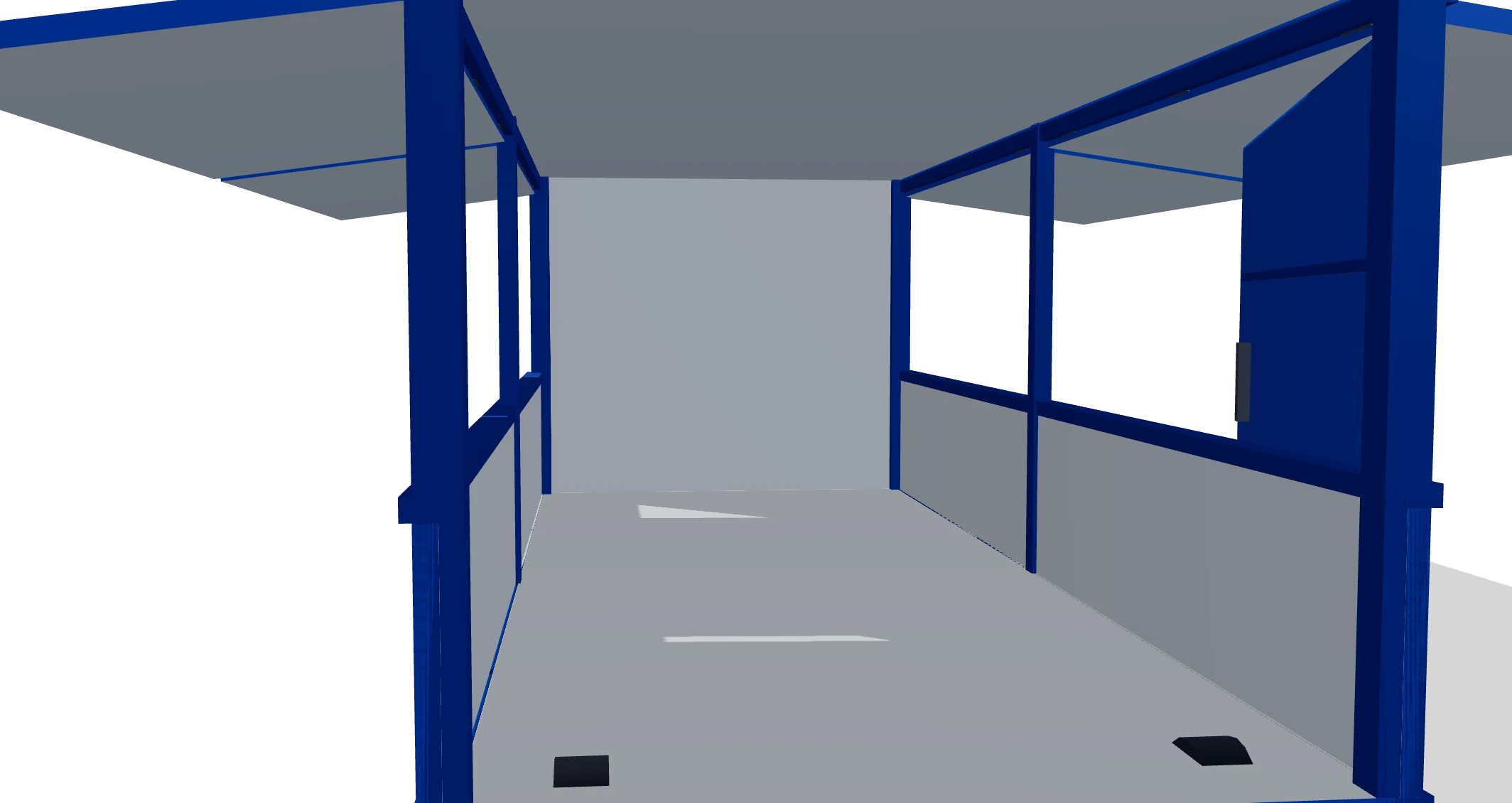
We take it away to be recycled
When it’s full, we collect it on the same trucks. The board is processed back into gypsum and paper.
Who it’s for
Councils and transfer stationsA bin by the gate. Plasterboard leaves as a recyclable, not as levy.What it saves your siteBuilders and construction sitesOffcuts into the blue bin as you go. One line in the waste plan, sorted.How it works on site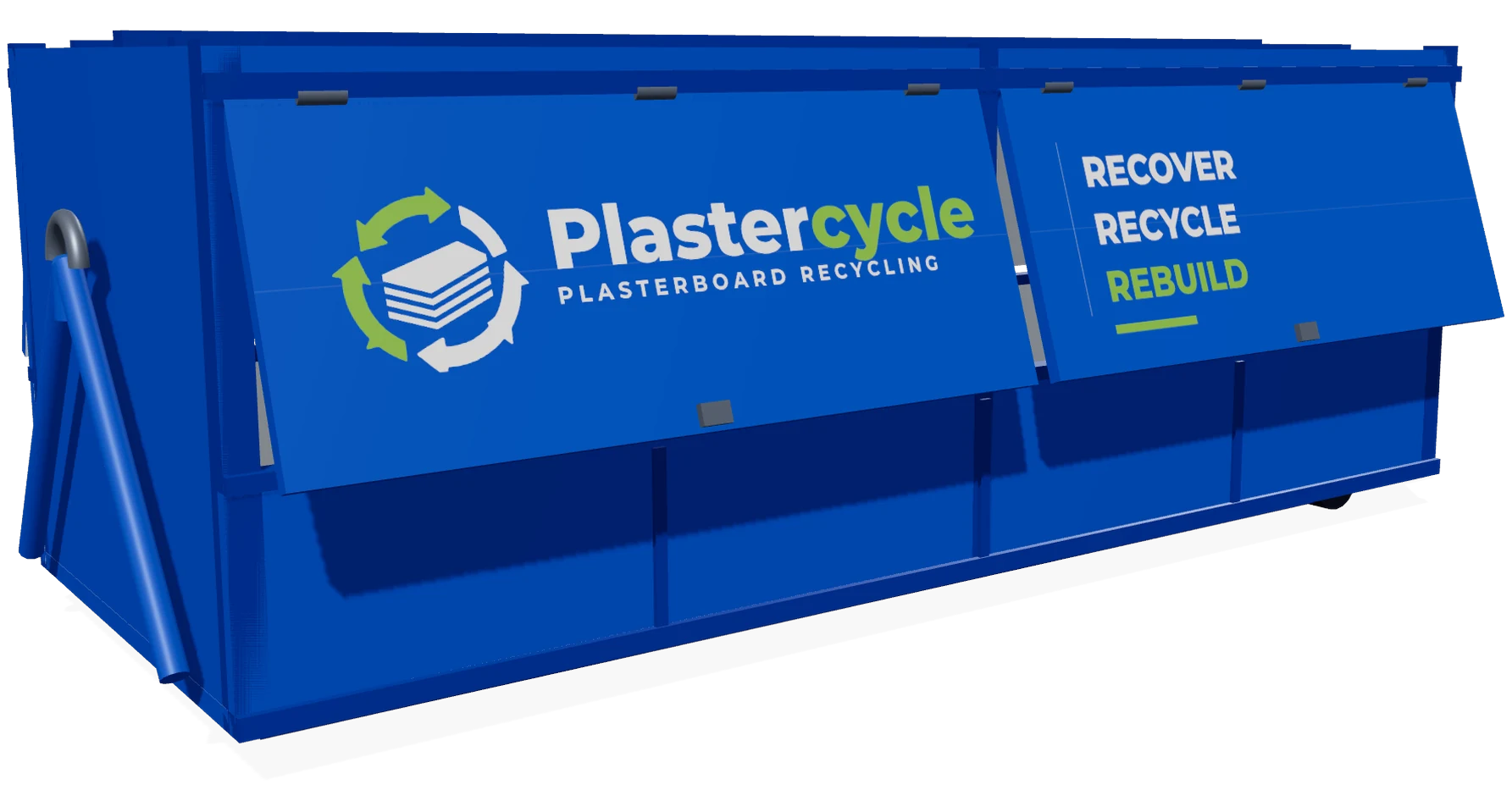 Residential buildersA bin on the house site while the plasterers work. We collect it when it’s full.How it works on sitePlaster manufacturers and retailersPlasterers bring back their off-cuts when they collect their next load.Talk to us about a bin
Every tonne buried is a tonne of levy
In 2026–27 a tonne of waste to a metropolitan landfill carries $177.19 of state levy in Victoria, $180.20 in New South Wales and $135 in Queensland — before the gate fee.source Plasterboard in its own bin leaves your site as a recyclable instead.
Pick your state, put in the tonnes, and see what it adds up to.
500 t of plasterboard a year, metropolitan Victoria
$88,595
in state levy that no longer applies
Levy only, before gate fees. Bin count assumes about 7 t a load.estimate
Almost all of it is gypsum
Strip off the paper and a sheet of plasterboard is mostly the same mineral that gets quarried to make new board. Recovered, it goes back into plasterboard, into cement, and onto farms as a soil conditioner.source
One rule at the bin: plasterboard only
No fibro, no foil-backed board, no tiles, timber or rubbish. If you can’t tell whether a sheet is plasterboard or fibro, leave it out.why
Put a bin where the plasterboard turns up.
Tell us about your transfer station, depot or site and roughly how much board comes through. We’ll come back to you with a plan and a quote.
“Landfill transfers the problem of waste from one location to another, from one point in time to another, and ultimately from one generation to the next. Recycling transforms it.”